

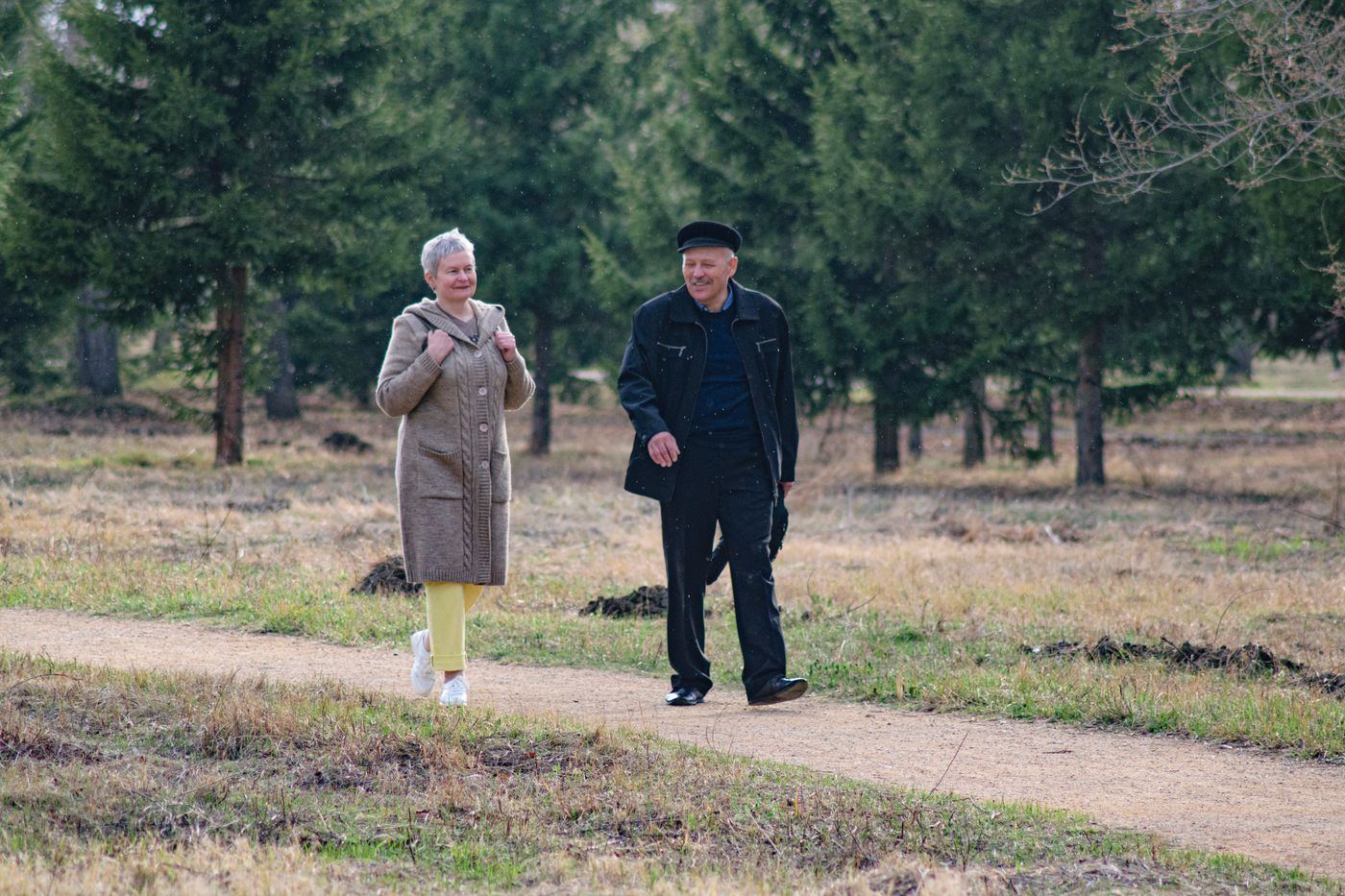
The meeting was going nowhere until it went for a walk. Managers who swear by walking meetings describe the same phenomenon: a conversation stuck for twenty minutes around a table unfreezes somewhere along the second street, when the walking rhythm takes over and the postures — literal and professional — relax. What was an eccentricity of a few famous executives has become a studied practice, and the research behind it is more serious than the gentle format suggests.
The foundational studies come from Stanford, where experiments found that creative output — measured by the quantity and originality of ideas — rose substantially while participants walked, and stayed elevated for a while after they sat down. The effect held for treadmill walking facing a blank wall, which tells researchers the mechanism is the movement itself, not the scenery.
What Walking Does to a Conversation
The format changes meeting dynamics in ways chairs cannot. Walking side by side replaces confrontation geometry with companionship; eye contact becomes optional, which makes difficult admissions easier; and the absence of laptops and slides keeps the talk on the one subject that justified the walk. Practitioners in our lifestyle and work coverage add a subtler benefit: a walk has a natural end. Meetings in rooms expand to fill the calendar slot; meetings on foot conclude when the route does.
There are limits, and honest advocates list them. Anything needing documents, screens or more than three people walks badly. Weather, mobility and safety bound the practice; a walking meeting must be an invitation, never an expectation that excludes the colleague who cannot join it.
The Health Dividend
The secondary gains are the ones public-health researchers care about. Knowledge workers sit for the majority of their waking lives, and the associated risks accumulate independently of exercise done at other hours. Two or three walking meetings a week convert dead sitting time into the moderate movement that guidelines — such as those of the Centers for Disease Control and Prevention — ask of adults, without asking anyone to find another hour in the day.
Organisations adopting the practice report the practical details matter: mapped routes of twenty and forty minutes, a culture that treats trainers as meeting attire, and diaries that schedule walks as deliberately as rooms.
There is an older management insight folded into the habit. Many of the decisions that matter in an organisation are not really made in the meeting that ratifies them; they are made in the corridor conversations around it, where hierarchy thins and candour survives. The walking meeting takes the corridor and gives it a route. Executives who adopted the practice during the years of dispersed work describe it as a way of recovering, deliberately, the informal layer that remote schedules dissolved — two people, one subject, no audience. It asks little: a door, a direction, and the discipline to leave the phones in pockets. Few management techniques can say as much.
The deepest appeal may be the oldest. From Aristotle’s peripatetic school to Darwin’s thinking path at Down House, the link between walking and thought has been observed for millennia. The modern office is simply rediscovering, with studies attached, what philosophers knew by foot.
