

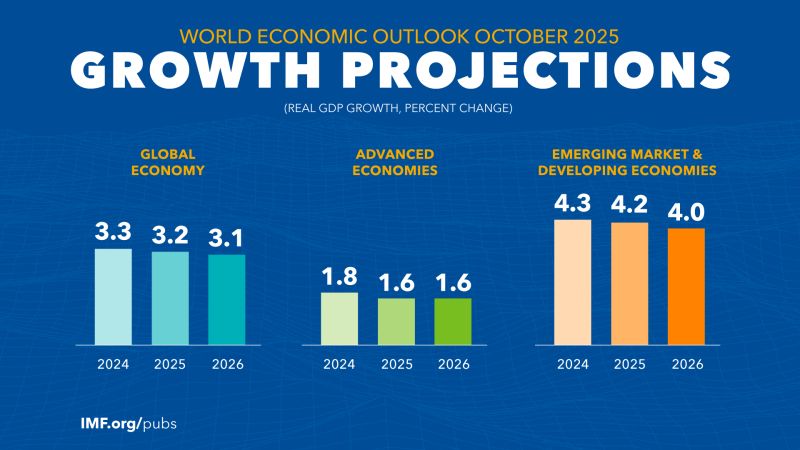
The global economy is currently experiencing a period of significant transition as markets respond to inflation trends, interest rate adjustments, and shifting trade dynamics. Investors, policymakers, and businesses are closely watching how these changes impact growth forecasts and financial stability. From stock market volatility to currency fluctuations, the world economy is adjusting to a new phase of uncertainty and opportunity. Understanding these developments is essential for anyone tracking global finance, investment trends, or economic policy direction.
Global Market Reactions to Economic Shifts
Stock Markets Face Increased Volatility
Global stock markets have shown noticeable volatility as investors react to changing economic signals. Concerns about inflation, central bank policies, and corporate earnings have created uncertainty in major indices. This has led to rapid price movements, with investors shifting between risk-on and risk-off strategies. While some sectors such as technology and energy remain strong, others are facing pressure due to reduced consumer spending and tighter financial conditions.
Currency Fluctuations Reflect Global Uncertainty
Foreign exchange markets are also responding strongly to global economic updates. Major currencies like the US dollar, euro, and yen are experiencing fluctuations as central banks adjust interest rates. A stronger dollar has put pressure on emerging market currencies, making imports more expensive for developing economies. These shifts highlight how interconnected global financial systems have become in response to economic policy changes.
Investor Sentiment Remains Cautious
Investor confidence remains cautious as global economic signals remain mixed. While some data points suggest resilience in labor markets and consumer activity, concerns about recession risks continue to influence decision-making. Many investors are focusing on safer assets such as bonds and gold, reflecting a defensive approach in uncertain market conditions. This cautious sentiment is shaping short-term market behavior worldwide.
Inflation, Interest Rates, and Central Bank Policies
Central Banks Continue Tight Monetary Policies
Central banks across major economies are maintaining tight monetary policies to control inflation. Interest rate hikes have been implemented in several regions to reduce price pressures. While these measures aim to stabilize the economy, they also slow down borrowing and investment activity. This balance between controlling inflation and supporting growth remains a key challenge for policymakers.
Inflation Trends Show Mixed Signals
Inflation rates are showing mixed patterns across different countries. Some economies are seeing gradual declines in inflation, while others continue to face persistent price pressures in essential goods and services. Energy and food prices remain key contributors to inflation variability. These uneven trends make it difficult for global policymakers to adopt a uniform economic strategy.
Impact on Consumer Spending and Growth
Higher interest rates and inflation pressures are directly affecting consumer spending patterns. Households are becoming more cautious with discretionary spending, which is slowing retail growth in several regions. At the same time, businesses are facing higher borrowing costs, which can limit expansion plans. This overall slowdown is shaping global growth expectations for the coming quarters.
Trade, Supply Chains, and Global Economic Outlook
Global Trade Faces Structural Adjustments
International trade is undergoing structural changes due to geopolitical tensions and evolving economic policies. Countries are reassessing trade agreements and focusing more on domestic production. This shift is influencing global supply chains and altering traditional trade flows between major economies. As a result, businesses are adapting to new sourcing strategies.
Supply Chain Stability Gradually Improving
After years of disruptions, global supply chains are showing signs of stabilization. Shipping delays and shortages have reduced in many sectors, although certain industries still face logistical challenges. Companies are investing in more resilient supply chain systems to reduce future risks. This improvement is helping support moderate economic recovery in some regions.
Global Growth Forecast Remains Uncertain
The overall global economic outlook remains uncertain due to multiple overlapping risks. While some regions are expected to maintain steady growth, others may experience slower expansion. Factors such as inflation, geopolitical tensions, and monetary tightening continue to influence projections. Economists emphasize that adaptability will be crucial for navigating future economic conditions.
Financial Markets and Investment Trends
Shift Toward Safe-Haven Assets
In response to uncertainty, many investors are moving toward safe-haven assets such as gold and government bonds. These assets are traditionally seen as more stable during periods of economic instability. This shift reflects growing caution in global financial markets as investors prioritize capital preservation over high-risk gains.
Technology and Energy Sectors Remain Key Drivers
Despite volatility, the technology and energy sectors continue to play a major role in global market performance. Technological innovation and rising energy demand are supporting long-term growth in these industries. However, they are also sensitive to regulatory changes and global economic conditions, making them both opportunity-rich and risk-sensitive sectors.
Long-Term Investment Strategies Gain Importance
As short-term uncertainty continues, long-term investment strategies are becoming more important for both institutional and retail investors. Diversification and risk management are key themes in current market planning. Investors are increasingly focusing on sustainable growth and stable returns rather than short-term speculation.
FAQs
What is driving current global economic changes?
Inflation, interest rate adjustments, and geopolitical tensions are the main drivers of current global economic changes.
Why are global stock markets volatile?
Markets are reacting to uncertain economic signals, including inflation trends and central bank policies.
How do interest rates affect the global economy?
Higher interest rates slow borrowing and spending, which can reduce inflation but also limit economic growth.
Why is the US dollar strengthening?
The US dollar is strengthening due to higher interest rates and investor demand for safer assets.
What is the global economic outlook?
The outlook remains mixed, with moderate growth expected but ongoing risks from inflation and global uncertainty.
Conclusion
The global economy is currently navigating a complex environment shaped by inflation pressures, monetary tightening, and shifting trade patterns. Markets are reacting with volatility, while investors remain cautious about future growth prospects. Despite challenges, signs of stabilization in supply chains and steady sectoral performance offer some optimism. Moving forward, adaptability, smart investment strategies, and close monitoring of economic trends will be essential for navigating the evolving global financial landscape.
